We are the most popular brand for Giveaways, WordPress Plugins & WordPress Themes.
Request Themes & Plugins or Get New Updates
Can’t find your favorite WordPress item? Submit a request above, and we’ll add it to our repository!
Important: Extract Before Uploading
After downloading a file from our website, unzip it first. The main zip file may contain additional folders like templates, documentation, or other resources. Ensure you upload the correct file to avoid errors.
How to Install Plugins
How to Install Themes
Request Themes & Plugins or Get New Updates
Can’t find your favorite WordPress item? Submit a request, and we’ll add it to our repository!

Buy Latest Version & Future updates
$15.00
$4.99
Join Our Membership to Access All Products
Download this and 12000+ Plugins & Themes as a premium member for only $7.99.
Most directory projects fail for one boring reason. The content model is unclear. You start with listings, then you add events, then you need claims, bookings, messages, reviews, and suddenly WordPress feels like a spreadsheet with a theme on top.
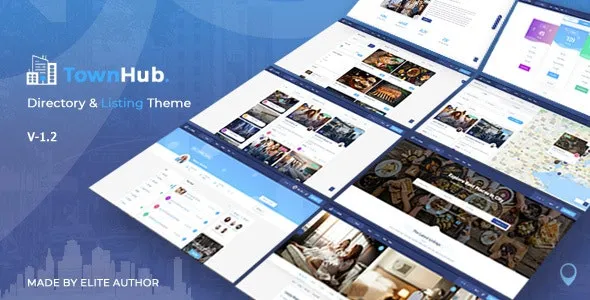
TownHub Directory and Listing WordPress Theme is one of the few directory themes that tries to solve the whole workflow, not just the front end. When it is set up properly, it gives you a consistent “listing as a product” structure with categories, locations, search, and submission flows that clients can understand.
I have used it on live installs where the initial demo import looked perfect, then broke the moment we changed the permalink structure or added a caching layer. It is fixable, but you need to treat it like an application, not a brochure theme.
TownHub is best when you need a directory that users can browse and filter, and where vendors can submit listings with rich fields. Think local business directories, city guides, coworking and venue catalogs, services marketplaces, and “best of” niche lists.
It typically covers these building blocks:
Listings with custom fields, galleries, opening hours, maps, and taxonomy-driven filtering. Front-end submission and editing. Review and rating flows. Claiming a listing. Monetization via paid packages, depending on how you configure the submission model.
Where people overestimate it is in full marketplace behavior. If you need multi-vendor order management, complex booking inventory, or heavy transactional flows, you will still end up integrating additional plugins and writing glue code. TownHub can be the directory layer, but it is not an all-in-one marketplace engine.
The demo makes everything feel settled. In reality, directory sites are sensitive to small structural choices. The biggest friction I see is teams changing core taxonomies late. Locations, categories, and listing types should be decided before content entry.
Another common trap is assuming the search and filters will “just work” after you add custom fields. If you add fields that need to be searchable, you have to confirm how the theme indexes those fields and what query logic it uses. Otherwise, you ship a directory where users cannot find what they just filtered for.
We also had an install where map tiles loaded fine in development but failed in production because API restrictions were tied to the wrong domain. That kind of issue looks like a theme bug until you trace network requests.
I treat the first hour as architecture, not design. Decide the listing schema, decide which fields matter for filtering, then decide what “submission” means. Is it free with upsells, paid packages, or moderation-first?
Then I validate the theme’s core paths:
Single listing pages must load fast and consistently. Archive pages must paginate correctly. Search results must be index-safe. Submission forms must save reliably with non-admin roles.
Only after those are stable do we style. If you start with styling, you will rework templates when you discover that the listing type needs different fields or that the taxonomy structure is wrong.
You can build a directory with a custom post type plugin, a form plugin, and a filter plugin. I have done that. It is flexible, but you spend weeks aligning UX, permissions, and templates.
TownHub’s advantage is cohesion. Listing submission, display templates, and directory navigation are designed to work together. That matters when clients need a predictable admin and when you need to ship quickly.
The trade-off is that you inherit the theme’s opinions. If your directory requires unusual filtering logic, multiple listing schemas with radically different fields, or a headless front end, a modular “build-your-own” stack may be cleaner long term.
TownHub can feel snappy on small datasets, then slow down when you add real volume. The pressure points are search queries, map rendering, and taxonomy-heavy archive pages.
On larger sites, we usually do three things early:
First, make sure object caching is in place and that the host supports it properly. Second, keep filters focused. Every extra “filter by custom field” adds query cost. Third, watch image payload. Listing cards with unoptimized thumbnails can crush Core Web Vitals faster than any PHP bottleneck.
If you are planning tens of thousands of listings, you should test with seeded content before committing. A directory theme can be “feature complete” and still struggle if the underlying queries are not optimized for your specific filter combinations.
TownHub is theme-driven. That means updates can touch templates, widgets, and bundled components in ways that are harder to isolate than a standalone plugin. We keep a staging site and treat updates as releases, not clicks.
Customization is doable, but you should plan it. If you need to change listing layouts, submission steps, or field behavior, do it with a child theme and documented overrides. Direct edits will not survive updates.
Also, be realistic about UX. Directory sites need moderation tools, spam controls, and clear submission rules. The theme can provide the form, but it does not replace operational policy.
Do not start on production. Clone the site or spin up a staging environment with the same PHP and database versions.
Keep the original ZIP intact. If the package includes multiple zips (theme and bundled plugins), do not rename them. WordPress is picky about folder naming.
Go to Appearance, Themes, Add New, Upload Theme. Upload the TownHub zip and activate it. If you see a “missing stylesheet” error, you likely uploaded the wrong zip from the package.
After activation, TownHub will prompt you to install companion plugins. Install them in batches and refresh between steps. If one plugin fails, fix that before continuing so you do not stack errors.
Demo import is useful for layout reference, but it can pollute your database with pages and taxonomies you will later delete. On client work, we often skip it and build a minimal “real” structure instead.
Set permalinks early. Then open a listing, a listing archive, and a search results page. If you see 404s, flush permalinks and confirm rewrite rules are not blocked by server config.
Create a test user with the same role as your future submitters. Submit a listing, edit it, upload images, and verify moderation behavior. This is where most hidden permission issues show up.
It is designed with monetization in mind, but the exact flow depends on how you configure submission and which companion plugins are active. I always test the full checkout and “after purchase” state before promising paid submissions to a client.
Usually, permalinks or rewrite rules. Save permalinks again, confirm your server allows WordPress rewrites, and check that the listing post type slug matches what the theme expects.
You can change fields, but searchable filtering is the tricky part. Add fields intentionally, then confirm they are queryable in the theme’s filter system. Otherwise, you end up with fields that display but cannot be used to refine results.
Yes, if you model locations cleanly and keep URL structure consistent. The mistake is mixing “city” as both a taxonomy and a custom field. Pick one approach and stick to it.
Directory pages can be cached safely, but user-specific pages like submission dashboards should not be. We exclude account and submission routes, then test logged-in behavior to avoid stale forms and confusing errors.
Use moderation by default, limit anonymous actions, and add friction where it matters. The theme gives you the submission layer, but you still need anti-spam controls and clear rules for what gets published.
It can work, but plan for template and content model changes. On existing sites, I recommend creating a staging copy, installing TownHub there, mapping content carefully, then migrating once URLs and taxonomies are stable.
Update on staging first, check listing pages, search, submission, and any monetization flow. Then deploy. Directory themes touch many moving parts, and small changes can affect indexing and user journeys.
Geotoko is a trusted GPL website for WordPress themes, plugins, Shopify templates, and free giveaways. Download original, secure GPL files with lifetime updates.
All products on Geotoko are fully licensed under the GNU General Public License (GPL) and are independently reviewed for safety and quality.