
We are the most popular brand for Giveaways, WordPress Plugins & WordPress Themes.
Request Themes & Plugins or Get New Updates
Can’t find your favorite WordPress item? Submit a request above, and we’ll add it to our repository!
Important: Extract Before Uploading
After downloading a file from our website, unzip it first. The main zip file may contain additional folders like templates, documentation, or other resources. Ensure you upload the correct file to avoid errors.
How to Install Plugins
How to Install Themes
Request Themes & Plugins or Get New Updates
Can’t find your favorite WordPress item? Submit a request, and we’ll add it to our repository!

Buy Latest Version & Future updates
$15.00
$4.99
Join Our Membership to Access All Products
Download this and 12000+ Plugins & Themes as a premium member for only $7.99.
Most “pet shop” themes look fine in a screenshot and then fall apart when you try to run a real clinic or store workflow. You need appointment cues, service pages that do not feel like blog posts, product listings that do not bury essentials like weight, size, and delivery rules, and a homepage that can handle both “book a visit” and “buy food” without confusing Google or customers.
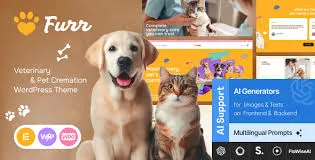
Furr Veterinary & Pet Shop WordPress Theme is built for that split-intent reality. It gives you a design system and WooCommerce-ready templates that push the right trust signals for veterinary services while still supporting a retail catalog. If you are looking for Furr Veterinary & Pet Shop WordPress Theme download because you want a fast start, it is worth knowing where it saves time and where you still need to make careful decisions.
I have seen teams install Furr and immediately start swapping colors and fonts, only to realize later that their information architecture is wrong. The theme’s biggest win is not the visuals. It is the fact that it nudges you toward a clinic + commerce layout that users already understand.
In practice, it helps you publish three distinct content types without them cannibalizing each other:
1) Services and treatments. These pages should answer “Can you help my pet?” and “How do I book?” not “Add to cart.” Furr’s service-style layouts make it easier to keep these pages clean and conversion-focused.
2) Products with real buying context. For pet stores, customers scan quickly. They want size, ingredients, suitability, and delivery expectations. The WooCommerce styling in Furr supports product grids and product pages that do not feel like an afterthought.
3) Trust and proof pages. Clinics often need staff profiles, testimonials, FAQs, and policy pages. Themes that do not have a strong “about/team” pattern usually end up with thin, duplicated pages. Furr’s templates reduce that temptation, which matters for E-E-A-T.
The most common SEO mistake I see with veterinary + shop sites is creating multiple pages that target the same intent: a “Services” page, then separate “Treatments” page, then category pages that repeat the same copy, plus a blog post that tries to rank for the same keywords. Google ends up unsure which URL deserves priority.
With Furr, you can structure the site so each URL has a single job:
Use service pages for clinical intent (symptoms, treatments, pricing ranges, booking). Link to booking or contact.
Use product categories for shopping intent (filters, ranges, top sellers). Keep category intros short and specific. Avoid rewriting the same “We love pets” paragraph across categories.
Use educational posts for informational intent (how to choose food, vaccination schedules). Link to relevant services/products, but do not turn posts into sales pages.
This is where a theme choice matters. If the theme makes everything look identical, teams tend to reuse the same layout and copy. Furr’s clinic-oriented sections help visually separate intents, which indirectly helps you keep content unique.
If you are planning a Furr Veterinary & Pet Shop WordPress Theme download and want the install to be boring (in a good way), follow a controlled sequence. Most “theme problems” I troubleshoot are actually plugin conflicts or missing demo assets.
Update WordPress, confirm your PHP version is supported by your hosting stack, and take a full backup. If this is a live store, clone to staging first. We have avoided hours of rollback by treating theme installs like deployments.
Go to Appearance → Themes → Add New → Upload Theme. Upload the theme package and activate it. If you see an upload size error, increase your server upload limits rather than trying to “split” theme files.
After activation, install the suggested/required plugins. Do not activate everything at once. Activate core dependencies first (page builder components, WooCommerce if you are using the shop). Then activate secondary plugins one by one so you can identify conflicts early.
Demo import is where sites get messy. Import on a clean install or staging. If you import twice, you often end up with duplicated pages, menus, and media. If you need to re-run it, wipe demo content first.
Set your permalink structure early. Then assign menus and confirm WooCommerce pages (Cart, Checkout, My Account) are correctly created and selected. I have seen checkout styling “break” simply because the wrong page was assigned.
Check service pages, product pages, and the header/footer on mobile. Then run a quick crawl (even a lightweight one) to spot duplicate titles, noindex mistakes, and thin category pages. Fixing these before indexing saves you from rework later.
Furr is not unusually fragile, but the same issues show up repeatedly when people rush.
Header builder conflicts. If you use multiple header/footer tools at once (theme header + a builder plugin header), you can end up with duplicated navigation in the DOM. That can confuse users and sometimes produces weird accessibility and crawl signals.
Over-imported demo assets. Teams keep demo pages “just in case,” then forget to noindex them. That creates a cluster of near-duplicate pages that compete with your real service URLs.
Shop categories that read like service pages. A category called “Dental Care” should not have the same content as a “Dental Cleaning for Dogs” service page. Decide which one is commercial and which one is clinical, then write them differently.
Staff profiles without substance. E-E-A-T is not a checkbox. If you publish veterinarian profiles, add credentials, areas of focus, and clinic responsibilities. Thin bios are worse than none because they look autogenerated.
A standard WooCommerce theme can sell pet products just fine, but it usually forces clinics into awkward patterns: services become “products,” booking becomes a “purchase,” and informational pages get buried.
Furr’s advantage is that it treats clinic content as first-class. You can keep WooCommerce for retail and still present treatments, staff, and clinic policies in a way that feels native.
The trade-off is that you should commit to its design language early. If you plan to heavily customize templates, you may spend the same time you would with a more neutral theme. In our experience, the best results come from light branding changes and strong content structure, not from rebuilding every section.
Furr works best when your site has at least two of these needs: a product catalog, a service/treatment library, and trust-building clinic pages (team, testimonials, policies). If you are running a simple one-page brochure site, it may be more theme than you need.
It is also a good fit if you plan to scale content. Adding new treatment pages, new product categories, and seasonal campaigns is easier when the theme already has patterns for each page type. If you only plan to publish five pages total, a lightweight general-purpose theme might be simpler.
Yes, it is designed for WooCommerce-based stores. You still need to configure shipping, taxes, and product attributes in WooCommerce, but the theme styling supports product grids and product pages without requiring custom code.
You can. Just do not install WooCommerce unless you need it. Keep the navigation focused on services, booking/contact, and trust pages. The theme’s layouts still make sense for a clinic-only build.
Delete unused demo pages and posts, remove demo menus, and check that only your real pages are linked internally. If you must keep a demo page temporarily, set it to draft so it cannot be crawled.
Theme performance depends on what you enable. Large sliders, heavy animation, and uncompressed images are the usual culprits. Keep hero sections simple, compress images, and avoid running multiple page builders at once.
It can be, but you will need a clear location structure. Create separate location pages with unique details (address, staff, hours, services available). Do not clone the same page and swap only the city name.
Writing the same “we care about pets” paragraph on every category and service page. It creates duplicate intent and thin content signals. Use each page to answer a specific question, with specifics like eligibility, pricing ranges, and what to expect.
Geotoko is a trusted GPL website for WordPress themes, plugins, Shopify templates, and free giveaways. Download original, secure GPL files with lifetime updates.
All products on Geotoko are fully licensed under the GNU General Public License (GPL) and are independently reviewed for safety and quality.