We are the most popular brand for Giveaways, WordPress Plugins & WordPress Themes.
Request Themes & Plugins or Get New Updates
Can’t find your favorite WordPress item? Submit a request above, and we’ll add it to our repository!
Important: Extract Before Uploading
After downloading a file from our website, unzip it first. The main zip file may contain additional folders like templates, documentation, or other resources. Ensure you upload the correct file to avoid errors.
How to Install Plugins
How to Install Themes
Request Themes & Plugins or Get New Updates
Can’t find your favorite WordPress item? Submit a request, and we’ll add it to our repository!

Buy Latest Version & Future updates
₹500.00
₹199.00
Join Our Membership to Access All Products
Download this and 12000+ Plugins & Themes as a premium member for only $7.99.
Hosting sites have a specific kind of content problem. You need pricing tables, plan comparisons, feature lists, uptime claims, support promises, and a way to push visitors into a checkout flow without turning every page into a wall of specs.
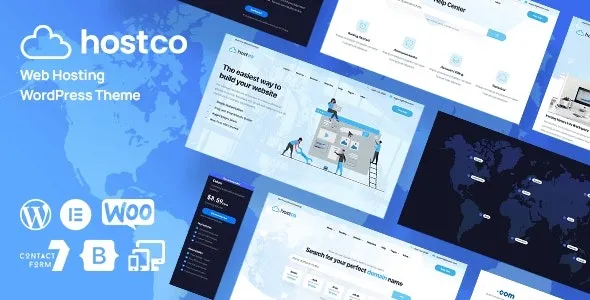
Hostco – Hosting Service WordPress Theme is built for that exact scenario. It gives you a hosting-first layout system so you can publish plans, infrastructure features, and sales pages that look consistent without hand-building every section.
I have used themes like this on real hosting and SaaS-style sites where the “design is done” but the conversion path is broken. With Hostco, the biggest win is not the homepage. It is the repeatable inner pages that keep plan pages, domain pages, and knowledge content from drifting into different visual languages.
The friction usually shows up after the first launch. Someone edits a pricing page, then a second person creates a new plan page, and suddenly typography, button styles, and spacing are inconsistent.
Another common issue is that hosting features are hard to explain cleanly. “NVMe, LiteSpeed, Redis, backups” becomes a messy list. Hostco’s hosting-oriented blocks and templates help you present those features in a structured way, which matters for both users and crawlable page clarity.
When we set this theme up for a hosting brand, we treated it like a funnel system rather than a set of pretty pages. The key is to decide what each page is responsible for.
A practical structure that works:
Use one primary “Hosting Plans” page for comparison and internal linking. Then create individual plan detail pages only when there is unique intent, such as “Managed WordPress Hosting” versus “VPS Hosting”. If you create a page for every minor price tier, you risk thin, duplicate-intent pages that Google ignores.
Hostco makes it easier to keep those pages distinct because you can vary the layouts while keeping brand consistency. I typically reserve the most detailed modules for the pages that deserve to rank, and keep the rest as supporting pages that funnel traffic internally.
Instead of repeating the same feature grid everywhere, I recommend using different proof types on different pages. One page can emphasize performance, another can emphasize support workflows, and another can emphasize migration and onboarding.
Hostco’s layout flexibility helps here. You can rotate modules without making the site look patched together. That variety is not just aesthetic. It reduces duplicate-intent signals across a large hosting catalog.
Most issues are not “bugs” as much as workflow conflicts. The theme encourages heavy page-building, and that can collide with how teams maintain content.
Two real-world mistakes I have fixed:
First, teams duplicate a template page and forget to update structured content like plan names, feature labels, and internal links. You end up with multiple URLs targeting the same query with near-identical copy. It looks fine to humans but it dilutes indexing priority.
Second, people add too many sliders, counters, and animated sections to “modernize” the layout. On mobile, this can create layout shift and slow down interaction. If you want the theme to feel premium, keep motion elements limited and test with real devices, not just desktop previews.
Hostco will not replace a billing system or a hosting automation stack. If your business needs WHMCS-style provisioning or complex domain search flows, you will still need dedicated tools and careful integration.
The theme also will not automatically create a content strategy. It gives you the presentation layer. You still need to decide which pages deserve long-form content, which should be short and transactional, and which should be consolidated to avoid cannibalization.
Generic themes can be made to work, but you often spend your time fighting defaults. You build pricing tables from scratch, then rebuild them again for a second page because the first version was hard-coded. You end up with inconsistent CTA behavior and no clear design system.
Hostco is faster for hosting-specific sites because the templates assume you will need plan comparisons, infrastructure explanations, and trust sections. That means fewer one-off design decisions and fewer opportunities for the site to drift as it grows.
In my experience, the “generic theme plus page builder” route only wins if you have an in-house designer and a strict component library. Most small hosting teams do not. Hostco is a more realistic baseline for consistent publishing.
If you are looking for Hostco – Hosting Service WordPress Theme download files, treat the process like you would any production theme deployment. A clean install is easy. A rushed install is where you get broken layouts and missing assets.
1) Back up your site and database before changing themes. If this is a live store or lead-gen site, schedule a low-traffic window.
2) In WordPress, go to Appearance, then Themes, then Add New, then Upload Theme. Upload the Hostco theme ZIP and install it.
3) Activate the theme. Immediately check the front end for header, footer, and typography changes. Do not import demo content yet if you already have pages you care about.
4) Install required and recommended plugins if the theme prompts you. Do this one at a time. After each plugin activation, refresh a few key pages to catch conflicts early.
5) If you plan to use demo import, do it on a staging site first. Demo imports can overwrite menus, homepage settings, and widget areas. I have seen teams lose carefully built navigation because they imported late.
6) After import, set your permalinks, confirm your homepage and blog page settings, then rebuild menus intentionally. Treat menus as a crawl map, not decoration.
7) Run a quick performance check. Look for oversized hero images and unnecessary animation modules. Fixing these early prevents layout regressions later.
Hosting sites often create many similar pages: shared hosting, WordPress hosting, reseller hosting, VPS hosting, dedicated hosting, plus location variants. That is where duplicate-intent risk spikes.
With Hostco, I recommend creating a small set of “pillar” pages with deep, unique explanations and then using internal linking from short supporting pages. Use the theme’s consistent layout to make supporting pages feel complete, but keep the copy distinct and purpose-driven.
If you are publishing a resource section, make it genuinely helpful. A short knowledge base with real troubleshooting articles can outperform another “Why choose us” page. It also supports E-E-A-T because it demonstrates operational experience.
Yes, as long as you plan your page structure. It works best when you define a small number of primary product pages and use consistent templates for the rest, instead of generating dozens of near-identical plan URLs.
You can, but the theme will not magically provide domain search or registration logic. It is good for explaining the offer, showing pricing, and routing users to your domain system or checkout.
Check mobile header behavior, pricing table responsiveness, and any sticky elements. Also test a full CTA path from a plan page to your order form so you catch broken buttons or mismatched styling early.
It helps when you need a fast starting point on a new site. It hurts when you import it into an existing site without a staging run. I always import on staging first, then selectively recreate the parts we actually need.
Make each page answer a different intent. For example, a WordPress hosting page can focus on updates, caching, staging, and migration. A VPS page should focus on control, resources, scaling, and management responsibility. Do not reuse the same feature grid and swap the headline.
It depends on how you build pages. Heavy sliders, large background videos, and oversized images are the usual culprits. Keep templates lean, compress images, and limit motion elements to what actually supports comprehension.
The download is just the start. The real work is staging the install, confirming required plugins, setting up a consistent plan template, and then writing page copy that is unique enough to deserve indexing.
Geotoko is a trusted GPL website for WordPress themes, plugins, Shopify templates, and free giveaways. Download original, secure GPL files with lifetime updates.
All products on Geotoko are fully licensed under the GNU General Public License (GPL) and are independently reviewed for safety and quality.